Category

Reading Recommendations

More Than Enough

Even if you think of yourself as having “enough” rather than “more than enough,” if you are spending at a conservative rate from your savings, the reality is that you may well be unlikely to deplete your assets during your lifetime. Which means that, financially speaking, “enough” might turn out to be “more than enough.”

In More Than Enough: A Brief Guide to the Questions That Arise After Realizing You Have More Than You Need, author Mike Piper provides a framework for how to approach the “problem” of having more financial resources than you may need.

Topics include:

  • Do you have more than enough?
  • Who gets the money?
  • Talking with your kids and other heirs
  • Giving and spending during your lifetime
  • Learning to spend and give more

The value in Piper’s short book is not that it provides an answer key for solving the more-than-enough “problem”. Instead, for those who have saved well and lived within their means, it poses questions for self-reflection and introduces ideas that individuals may wish to consider in conjunction with their advisors, including tax professionals, estate planning attorneys, and financial planners.

Piper is a Missouri Licensed CPA, and the author of several personal finance books and the blog Oblivious Investor.

How to Be More Tree

How to Be More Tree: Essential Life Lessons for Perennial Happiness by Liz Marvin uses the quiet wisdom of trees as a metaphor for living a calmer, more resilient, and more joyful life.

Through short, beautifully illustrated reflections, Marvin encourages readers to adopt tree-like qualities—such as rootedness, patience, adaptability, and generosity—to navigate stress and uncertainty with greater ease.

The book blends gentle philosophy with practical life lessons, reminding us to slow down, grow at our own pace, weather life’s seasons, and stay connected to others and the natural world.

Marvin’s uplifting meditation on finding lasting happiness by being steady, present, and resilient—just like a tree—seems appropriate, too, for those who celebrate Earth Day on April 22.

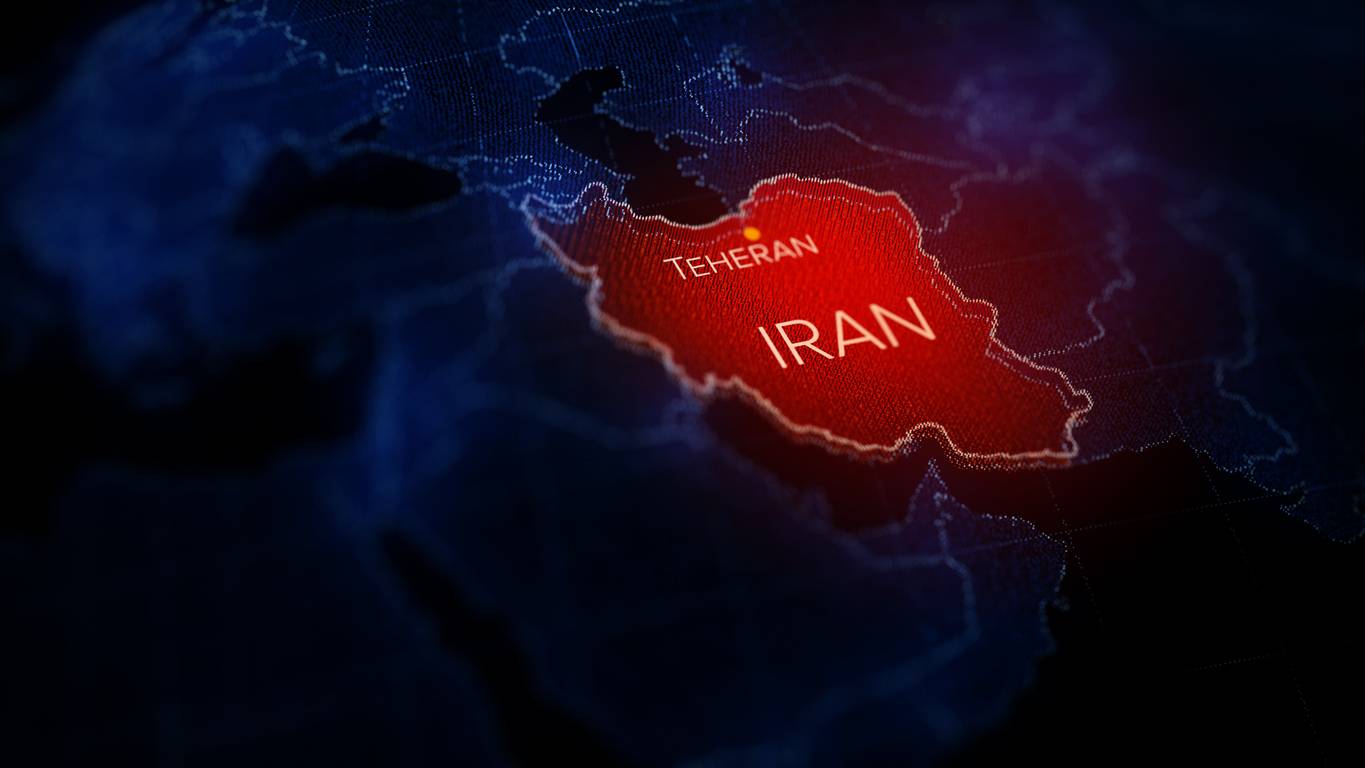
More On Iran – How We Got Here: Recommended Resources

You may be interested in where to turn for thoughtful, reliable coverage of the situation in Iran and the broader Middle East — sources that go beyond the daily news cycle and offer real context.

Below are two books and two podcasts (in addition to The Dispatch Podcast highlighted in the previous article) that you may find valuable.

The books provide essential historical background on how we arrived at this moment; the podcasts offer informed, ongoing analysis as events continue to unfold.

For Further Reading

Black Wave: Saudi Arabia, Iran, and the Forty-Year Rivalry That Unraveled Culture, Religion, and Collective Memory in the Middle East – Kim Ghattas (2020)

Kim Ghattas is a Lebanese-born journalist who grew up in Beirut during the civil war, served as a BBC Middle East correspondent and later as the BBC’s State Department correspondent, and is currently a senior fellow at the Carnegie Endowment for International Peace.

In Black Wave, named a New York Times Notable Book, she argues that the modern Middle East’s descent into sectarianism, extremism, and cultural repression traces back to the convergence of three events in 1979: the Iranian Revolution, the siege of the Grand Mosque in Mecca, and the Soviet invasion of Afghanistan.

From that point, she traces how Saudi Arabia and Iran — once allies — became rivals in a contest for religious and political supremacy that went far beyond geopolitics, distorting societies across the region for decades.

What sets the book apart is Ghattas’s narrative approach: rather than offering a dry policy history, she tells the story through the lives of individuals across seven countries and four decades — writers, journalists, and ordinary citizens whose lives were upended by forces largely beyond their control.

King of Kings: The Iranian Revolution — A Story of Hubris, Delusion, and Catastrophic Miscalculation – Scott Anderson (2025)

Scott Anderson is a veteran war correspondent who has reported from conflict zones across the globe — including Lebanon, Israel, Egypt, Chechnya, and Bosnia — and a contributing writer for the New York Times Magazine.

His earlier book Lawrence in Arabia is widely regarded as one of the essential texts on the origins of the modern Middle East. King of Kings, which won the 2025 Kirkus Prize for nonfiction and was a New York Times bestseller, is a narrative history of the 1978–79 Iranian Revolution.

Anderson centers the story on the Shah of Iran, who presided over vast oil wealth and American backing yet proved fatally disconnected from his own people, and on Washington, where a massive intelligence and military presence in-country failed to see the revolution coming.

Drawing on recently discovered sources and interviews with direct participants, including the Shah’s widow, Anderson makes a compelling case that the revolution was not inevitable but was the product of cascading miscalculations. — a theme that may resonate as US policy toward Iran is once again being tested.

For Further Listening

The FRONTLINE Dispatch (PBS)

FRONTLINE has long been one of the most trusted names in investigative journalism, and its podcast arm has responded to the current crisis with characteristically thorough coverage.

A recent episode examines the roots and ramifications of the U.S.-Israeli military operation in Iran, drawing on FRONTLINE’s deep bench of reporting on the region. PBS is also airing updated versions of two companion documentaries — Remaking the Middle East: Israel vs. Iran and Strike on Iran — later this month. For those who want rigorous, nonpartisan analysis of how we arrived at this moment and what may come next, this is a good place to start.

Iran: The Latest (The Telegraph)

For those who want to follow the conflict on a daily basis, this podcast from The Telegraph is a worthy source. Hosted by veteran foreign correspondents Roland Oliphant and Venetia Rainey, it offers daily updates and in-depth interviews with military strategists, international relations scholars, and Middle East policy experts.

Because it is produced by a British outlet, the coverage tends to be less filtered through American partisan dynamics and more focused on the broader geopolitical picture — including the war’s impact on Gulf states, European energy markets, and the wider diplomatic landscape. It is particularly useful for listeners who want to stay informed without being overwhelmed by the volume of U.S. cable news coverage.

Media for the New Year

The new year can act as a catalyst to expand horizons and vary daily routines. So far in 2026, I’ve expanded my regular news diet to incorporate balanced and diverse points of view from foreign-domicile media sources.

Here are three podcasts that I’ve been tuning into regularly, which you might find helpful:

  • BBC News – Newshour: the British Broadcasting Corporation (BBC) is the UK’s national public service broadcaster, founded in 1922 and operating as a chartered corporation, independent from government influence. This podcast is “long-form”, with daily episodes running about 45 minutes.
  • Reuters World News: the Reuters news agency was established in London in 1851 and acquired by the Thomson Corporation of Canada in 2008. This podcast is “short-form”, with daily episodes running about 10 minutes.
  • FT News Briefing: The Financial Times (FT) was founded in London in 1888. The British company Pearson, which had owned the FT since 1957, sold it to the Japanese holding company Nikkei a decade ago. This podcast has a financial markets orientation and is “short-form”, with daily episodes running about 10 minutes.

These daily productions can be accessed using a web browser, but you may find following via a podcast app more convenient. My favorite podcast app is Pocket Casts, which can be downloaded to your phone using the Apple App Store or through Google Play.

-RK

How (and Why) to Talk to Strangers

In The Power of Strangers: The Benefits of Connecting in a Suspicious World, journalist Joe Keohane explores a simple idea: that talking to strangers can make us happier, healthier, and more connected.

Keohane conducted his research through a combination of immersive personal experience and extensive academic investigation.

As a journalist, he embarked on a self-described “quest to master talking to strangers,” which involved actively engaging with people in a wide variety of settings—from cross-country train rides to international seminars.

In addition to his fieldwork, Keohane drew on a body of interdisciplinary research.

He consulted studies from psychology, sociology, anthropology, biology, and even theology to understand the roots of our fear of strangers and the benefits of overcoming it.

He explored how social interaction affects mental health, happiness, and cognitive function, and he incorporated insights from leading experts in these fields to support his findings.

In the prologue, Keohane asks the questions: “Why don’t we talk to strangers? When will we? What happens when we do?”

And he answers: “we become better, smarter, and happier people, and strangers—and by extension, the world—become less scary to us.”

Keohane quotes the philosopher Kwame Anthony Appiah: “When a stranger is no longer imaginary, but real and present, sharing a human social life, you may like or dislike him, you may agree or disagree; but if it is what you both want, you can make sense of each other in the end.”

Ultimately The Power of Strangers is an uplifting reminder of our shared humanity.

In an era marked by division and digital echo chambers, Keohane’s message is clear: reaching out to those we don’t know isn’t just good for our society, it’s good for our souls.

-RK

Keys to a Successful Retirement

In Keys to a Successful Retirement: Staying Happy, Active, and Productive in Your Retirement Years, author Fritz Gilbert offers a comprehensive and practical guide to navigating the transition into retirement with purpose and fulfillment.

Using the metaphor of baking a cake, Gilbert emphasizes that a successful retirement requires thoughtful preparation, the right “ingredients” (such as financial security, mental well-being, and meaningful activities), and a step-by-step plan.

He addresses both the financial and emotional aspects of retired life, including managing savings, healthcare, and the psychological challenges like aimlessness or depression.

Gilbert’s book encourages readers to define their own vision of retirement, stay socially connected, and pursue passions that bring joy and meaning, ultimately helping retirees craft a vibrant and satisfying new chapter of life.

-RK

Summer Reading Series: Wild

Summer Reading Series: Non-Fiction

Wild by Cheryl Strayed

A good summer read requires the ability for your mind to be fully transported into another person’s story and life and out of your own (in my opinion).

Wild, by Sheryl Strayed, does exactly that.

This summer, I chose a story about hiking trails on the West Coast, specifically the PCT (Pacific Coast Trail).

The story is told by Strayed as she covers 1,000 miles from the Mohave Desert through California and Oregon to Washington State. Woven into the story of this trek are the details of her past and how she got to this place both physically and mentally.

While the book is about backpacking and hiking, you do not have to be a hiking enthusiast to enjoy poring through these pages. In fact, you may enjoy it even more if you are not.

The story takes many twists and turns around the bend that you don’t see coming.

Ultimately the story is about finding your way free of the weight of past experiences, loss, and grief by allowing yourself to go through the difficult steps of processing it all.

Wild is also a story about taking action which leads you to learning your own hard lessons- while finding a way to let it all in, so that you can come out the other side healed and whole. (Likely not 100%, but possibly monumentally better.)

And it is a story of finding your own true strength. Facing what is in front of you head on.

In this account of her life, Strayed tells authentic tales of true kindness, tales of true grit, and tales of true fear.

You yourself will likely come away with some new perspective, inspiration, and possibly some motivation for beginning your own journey. Big or small. I know I did.

-Donna

Summer Reading Series: The Thinking Machine

Summer Reading Series: Biography

The Thinking Machine: Jensen Huang, Nvidia, and the World’s Most Coveted Microchip by Stephen Witt

This captivating biography doubles as a sweeping chronicle of the modern tech revolution.

Centered on Nvidia’s visionary CEO, Jensen Huang, the book traces the company’s rise from a modest startup focused on making computer components for PC video gamers to the world’s most valuable corporation by 2024.

Witt’s reporting illuminates how Huang’s big bet on artificial intelligence transformed Nvidia from a graphics card manufacturer into the backbone of the AI era.

In terms of biography, Witt’s interviews with Huang, his colleagues, and industry insiders enable him to paint a compelling portrait of a relentless innovator who defied Wall Street skepticism to reshape computing.

As a self-described member of the “marginally tech literate”, I found the book to be a valuable guide that explained key computing concepts and the specialized hardware and software that has made AI possible.

What sets The Thinking Machine apart, though, is its ability to contextualize Nvidia’s ascent within the broader cultural, economic, and scientific forces driving the AI boom. Witt explores the intellectual ecosystem that enabled Nvidia’s dominance, from academic breakthroughs to geopolitical tensions over chip supremacy.

Additionally, and importantly, Witt also discusses the growing anxiety among leading technologists and influential tech-oriented thinkers (including Geoffrey Hinton and Nick Bostrom) about the unchecked advancement of AI, and contrasts this with Huang’s more optimistic and pragmatic stance.

Witt’s treatment of these themes invites readers to consider not just the marvels of AI, but also the responsibilities that come with creating machines that can “think” faster and more efficiently than humans.

-Rob

Summer Reading Series: The Wide Wide Sea

Summer Reading Series: Narrative Non-Fiction

The Wide Wide Sea: Imperial Ambition, First Contact, and the Fateful Final Voyage of Captain James Cook by Hampton Sides

This is a detailed and morally complex account of one of history’s more consequential explorers. Captain James Cook, an 18th-century British navigator, is renowned for his three epic voyages that dramatically expanded European knowledge of the Pacific.

This book focuses on Cook’s third and final expedition, launched in 1776, which aimed to return a Polynesian man named Mai to his homeland and to search for the elusive Northwest Passage.

Sides portrays Cook not just as a brilliant navigator, but as a man increasingly consumed by stress, paranoia, and authoritarian impulses. As the voyage progresses, Cook’s treatment of native populations grows harsher, culminating in his violent death in Hawaii.

Themes explored in the book include:

  • Imperial Ambition vs. Indigenous Sovereignty: Sides examines how Cook’s voyages, though often framed as scientific and diplomatic missions, paved the way for colonial exploitation and cultural disruption.
  • The Clash of Cultures: The book delves deeply into the misunderstandings, miscommunications, and power imbalances that defined Cook’s encounters with Indigenous peoples across the Pacific.
  • The Psychological Toll of Exploration: Sides charts Cook’s transformation from a disciplined and humane leader into a man increasingly plagued by paranoia, authoritarianism, and emotional instability. This theme underscores the immense physical and psychological strain of long-term maritime exploration.

While Sides’ work may not be as sensational as Jaws (or have as much popular appeal), I found the book to be a gripping narrative that balances high-seas adventure with a thoughtful critique of colonialism.

-Rob

Summer Reading Series: 1776

Summer Reading Series: Non-Fiction

1776 by David McCullough

This book brings to life the pivotal year of the American Revolution with impressive detail and compelling storytelling.

Focusing primarily on George Washington and the Continental Army, McCullough captures the uncertainty, courage, and resilience that defined the struggle for independence.

McCullough chronicles not just Washington’s military campaigns, but the deep philosophical and practical divisions among colonists themselves – roughly one-third supported independence, one-third remained loyal to Britain, and one-third were undecided or indifferent.

Most importantly, 1776 shows how leadership during crisis requires both conviction and flexibility, as Washington repeatedly had to adapt his strategies while maintaining his core principles.

The book reminds us that the democratic ideals we take for granted were forged through messy compromise, painful setbacks, and the willingness of ordinary people to persist through uncertainty— serving as a reminder that deep divisions, however intense, are not unprecedented and offering hope that the divisions we experience today need not be permanent.

-Susan